CI/CD Best Practices for Modern Teams
1. Introduction
Continuous Integration and Continuous Deployment (CI/CD) are fundamental practices for modern software teams. A well-designed CI/CD pipeline automates the build, test, and deployment process, enabling teams to ship features faster with greater confidence.
2. Continuous Integration
CI ensures that code changes are automatically built and tested whenever they're pushed to the repository. Key practices include:
- Commit and push code frequently (at least daily)
- Run automated tests on every push
- Keep the build fast (under 10 minutes)
- Fix broken builds immediately
3. Continuous Deployment
CD automates the release process so that every change that passes your test suite is automatically deployed to production. This requires high confidence in your test coverage and monitoring systems.
4. Pipeline Design
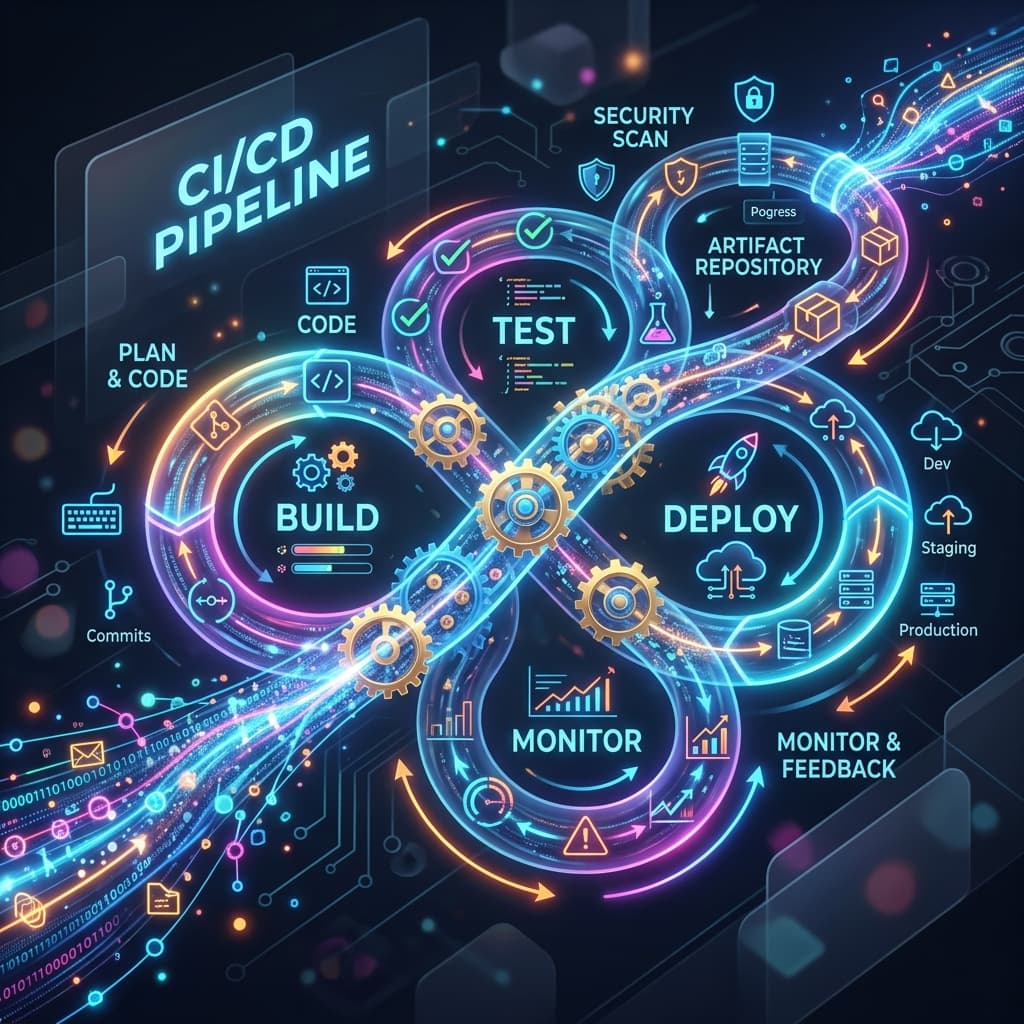
A well-structured pipeline typically includes these stages:
- Build — Compile code and create artifacts
- Unit Tests — Run fast, isolated tests
- Integration Tests — Test component interactions
- Security Scan — Check for vulnerabilities
- Deploy to Staging — Validate in a production-like environment
- Deploy to Production — Release with confidence
5. Infrastructure as Code
Define your infrastructure using tools like Terraform, AWS CDK, or Pulumi. This ensures environments are reproducible, version-controlled, and can be reviewed through the same PR process as application code.
6. Monitoring and Rollbacks
Implement comprehensive monitoring and have automated rollback mechanisms in place. Use canary deployments or blue-green deployments to minimize the impact of failures.
7. Conclusion
A robust CI/CD pipeline is the backbone of efficient software delivery. Invest time in building and maintaining your pipeline — it will pay dividends in faster releases, fewer bugs, and happier developers.


